Fachhochschule JOANNEUM Bad Gleichenberg
A Touch of the World in Bad Gleichenberg – Intercultural Learning with a Twist
International students bring global cultures into classrooms. Children encounter diversity, practise English, and engage with the world – locally.A project of curiosity, connection,and sustainability.
© Manuela Tooma
Objectives
The project brings international perspectives directly into the classrooms of local primary and lower secondary schools. Its aim is to foster intercultural encounters, reduce stereotypical thinking, and overcome language barriers in a playful and engaging way. Pupils are encouraged to reflect on their own cultural identity, experience diversity as part of everyday life, and apply English in authentic communication situations. International students take on an active role as cultural ambassadors, presenting their countries of origin while enhancing their didactic, intercultural, and linguistic competences. The project contributes to the implementation of several strategic objectives of FH JOANNEUM: – Promoting the university’s Third Mission through cooperation with local educational institutions – Advancing the “Internationalisation at Home” approach in rural regions – Strengthening intercultural and linguistic competences – Highlighting the Bad Gleichenberg campus as a place where diversity is lived and visible Following a successful pilot phase in 2024, the project was expanded in 2025 to include lower secondary schools and further refined in terms of didactic approach. An annual continuation is planned.
Background
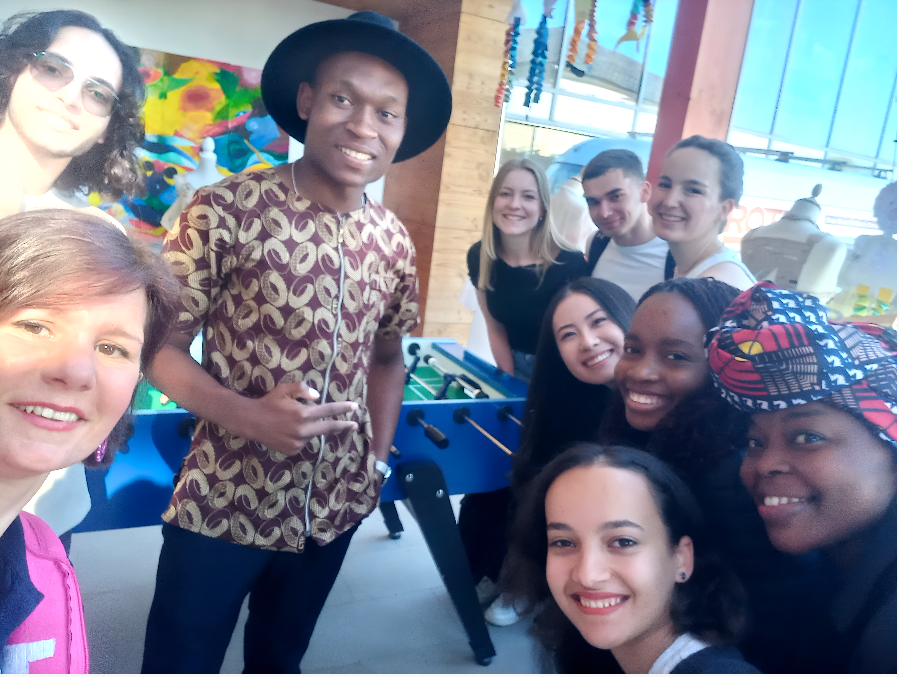
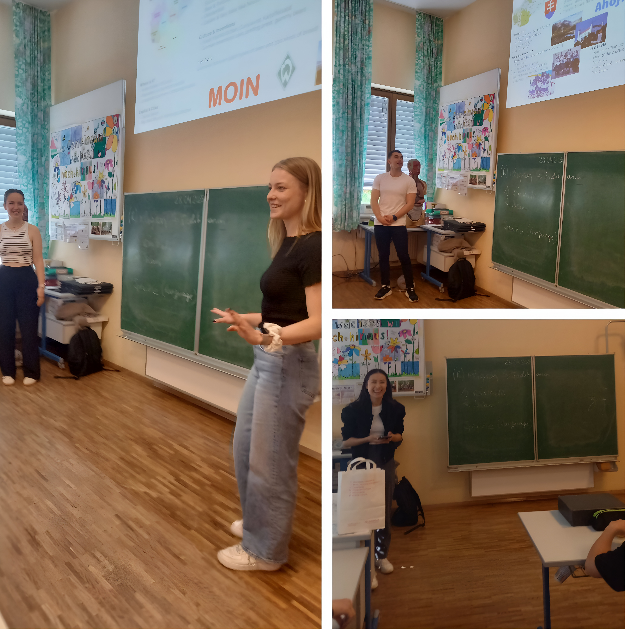
The starting point was the question of how the cultural diversity of international students on campus could be made visible and impactful beyond the university itself. In cooperation with the primary and later the lower secondary school in Bad Gleichenberg, an interactive format was developed that placed personal encounters at its core. Within a two-hour framework, pupils first reflected on their own cultural characteristics (language, religion, traditions), before international incoming students presented their countries of origin – sometimes wearing traditional dress and bringing objects such as drinks or music. The presentations were held in English, and pupils were encouraged to ask questions and explore both differences and commonalities. The project was initiated, designed, and implemented by a member of academic staff. The university supported the initiative through curricular flexibility, organisational freedom, and institutional visibility. Crucial to its realisation were the strong willingness of schools to collaborate and the commitment of the students involved. The project creates emotional learning spaces, fosters intercultural competences – and brings a glimpse of the world to South-Eastern Styria.
(Implemented) Activities
The project was implemented as a two-hour interactive workshop at the primary school (2024) and lower secondary school (2025) in Bad Gleichenberg. At the outset, pupils were encouraged to reflect on their own cultural background: What languages do we speak – and is it really only German? What religions exist in Austria? What do we eat, and which traditions are observed? Only then did international students present their countries of origin – including Georgia, Kazakhstan, Mozambique, Egypt, Slovakia, and Germany – using age-appropriate English. Some wore traditional dress or brought typical drinks from their home countries. Their content covered a wide range of topics, from language and religion to national holidays, music, and hobbies. Pupils were actively involved: they asked questions, shared personal experiences, and explored similarities and differences – often using hands, gestures, and humour rather than words. English was not positioned as a learning objective but used as a communicative bridge. The exchange was supported by tangible objects and creative methods. These activities promote intercultural sensitivity on an equal footing, strengthen language competence in a playful manner, and create an experiential space that goes beyond conventional classroom learning. Personal contact renders global issues tangible and helps break down barriers – both linguistic and cultural.
Results
The project achieved a range of outcomes that significantly contributed to its objectives. Through direct encounters with international students, children and young people developed a heightened awareness of cultural diversity, used English with greater confidence, and began to reflect on assumptions they had previously taken for granted. The informal and playful engagement with language and culture lowered inhibitions and sparked curiosity – a key prerequisite for intercultural learning. International students also benefitted: they engaged more deeply with their own cultural backgrounds, gained didactic experience, and strengthened their communication skills in intercultural settings. The encounters fostered self-reflection and a sense of personal agency. In the long term, the project contributes to making internationalisation tangible in rural areas and promotes key social competences such as openness, empathy, and the ability to engage in dialogue. Positive feedback from pupils, teachers, and students confirms the effectiveness of the format. A continuation and further development – for example by involving additional school levels or exploring thematic depth – is both planned and encouraged.
Lessons learned & transferability
The implementation of the project provided valuable insights into the impact of intercultural education formats in rural areas. Personal encounters proved particularly effective when designed to be dialogue-oriented, context-sensitive, and age-appropriate. The low-threshold approach encouraged emotional engagement and supported lasting learning. One key challenge was scheduling: aligning school timetables with the availability of international students required early planning, flexibility, and close communication with all stakeholders. Integrating the format into the school year calendar has proven to be a successful strategy. The two-stage didactic structure also proved effective: encouraging pupils to reflect on their own cultural identity laid the foundation for a more conscious and open encounter with other cultures. The use of English did not pose a barrier – on the contrary, it promoted informal learning and was supported by non-verbal communication, visual aids, and humour. In sum, intercultural learning proves particularly powerful when shaped as an immediate, lived experience. The project is easy to implement, adaptable, and inspiring – for schools as well as for higher education institutions.
Comments
The project is grounded in evidence-based principles of intercultural learning, employing a reflective and dialogical approach that strengthens both pupils’ cultural self-awareness and international students’ metacognitive competencies. It addresses key challenges of “Internationalization at Home” in rural contexts and contributes to decoupling language learning from mere linguistic goals, favouring communicative competence development instead. The collaboration between university and schools exemplifies successful Third Mission engagement. Furthermore, the project generates practice-oriented data on the efficacy of low-threshold educational formats, providing a foundation for further scientific research and didactic innovation. The integration into curricula combined with emotional experiential learning fosters sustainable impact and multiplier effects.
© Manuela Tooma
© Manuela Tooma
Target group(s)
- University managements
- Lecturers
Topics
- Global Mindset
- Internationalisation
- Location positioning
Contact person(s)
Manuela Tooma
Further links
HMIS2030
To view more examples of good practice or examples from other universities, please click on the button below.